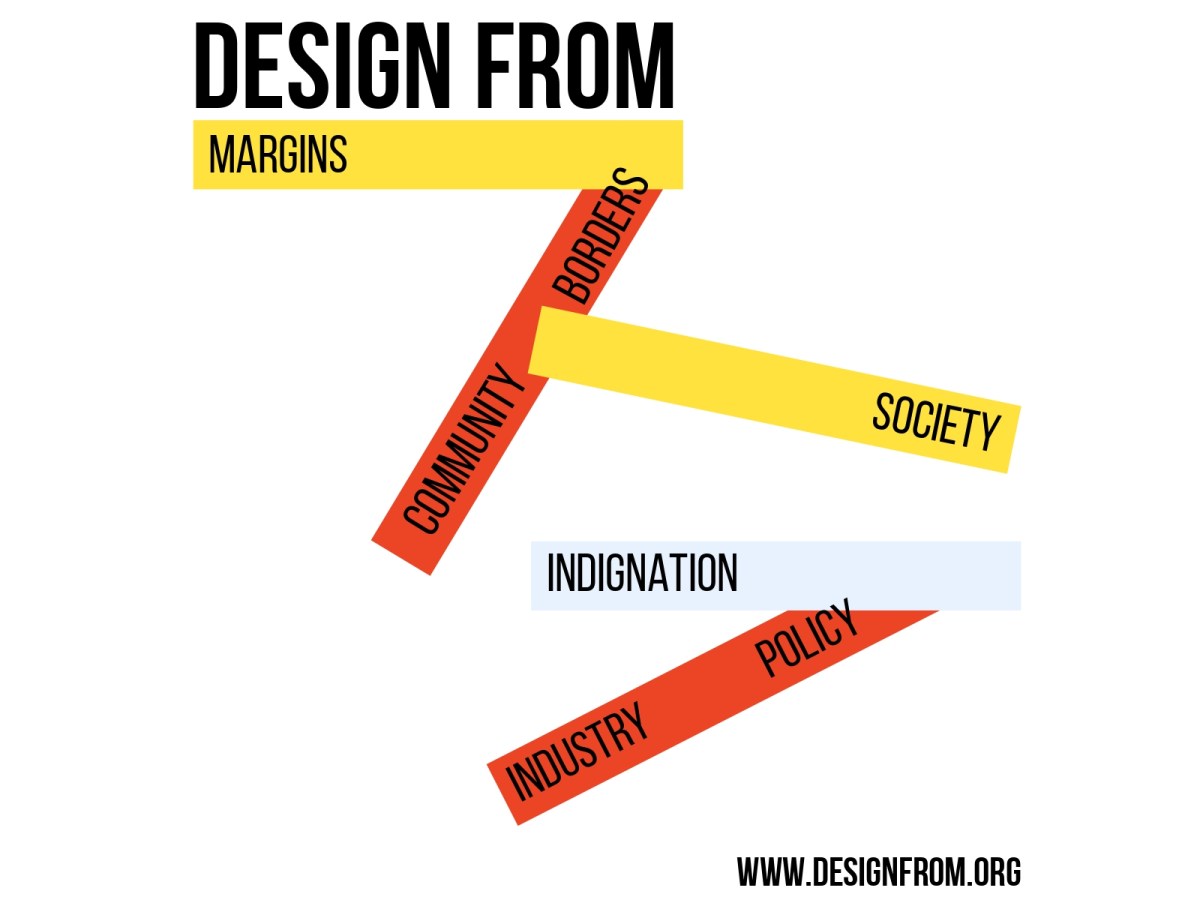
Welcome to Design From site: from society, from people, from humanity, community, from margins, from borders, from indignation…….
The prepositions matter
The difference between “design from” and “design for” or “design by” can imply a fundamental shift in design perspective and approach.
Design from: This expression suggests that design originates and is grounded in specific principles, values, subjectivities, or methodologies. For example, “designing from critical thinking” implies that design is guided by deep analysis, reflection, and critical evaluation of the social, political, cultural, and ethical contexts in which it operates. “Designing from people” has an implication formulated from empathy and opposes the concept of alienation, proposing an exchange and dialogue between designers and the people “from” whom the design originates rather than “for whom” it is designed, which emphasizes the concept of alienation more.
“Work is not, therefore, the satisfaction of a need, but merely a means to satisfy needs external to it. The alienation of work appears clearly in the fact that as soon as there is no physical or other coercion, one flees from work as from the plague. External work, work in which man alienates himself, is a sacrifice of self, mortification. Finally, the external character of work for the worker appears in that it is not his own work, but someone else’s; that in it, he does not belong to himself, but belongs to another.” (Marx, 1844).
“From” contemplates the process of empathy that aims precisely to balance the critical state we live in, not just the alienation we live and operate in, or the superficiality, and manipulation of the political and hegemonic order. This is precisely what motivates and causes designers and art to react to counteract it, trying to find new ways to create. Until now, the idea “from” which we design has not been rethought as proposed here, as a discursive apparatus that dislocates meaning and questions the motive for designing, to foster true empathy with vulnerable, marginalized groups and critical states of violence that also strike and are struck by environmental, political, and economic problems.
Therefore, designing for and by, as normally used; the article that accompanies the verb and contrasts with the proposal “designing from,” suggests the following:
Design for: Traditionally, “designing for” implies focusing on meeting the needs and desires of end-users, ensuring that the designed products, services, or experiences are useful, accessible, and effective for them.
Design by: This expression “design by” can imply that the design is done on behalf of someone or something, such as designing on behalf of a client or organization or designing with the purpose of achieving certain predefined objectives.
The implications of “designing from” include critical and reflective focus, design oriented toward a deep understanding of social problems and challenges, and identifying solutions that consider structural and systemic aspects. Emphasis on ethics and responsibility, design guided by ethical values and social considerations, seeking to contribute positively to well-being and equity in society. It promotes innovation that not only seeks efficient solutions but is also ethically responsible and socially just.
In summary, “designing from” implies a shift towards a deeper, reflective, and ethical approach to design, which seeks not only to solve practical problems but also to address the fundamental and systemic challenges facing contemporary society.
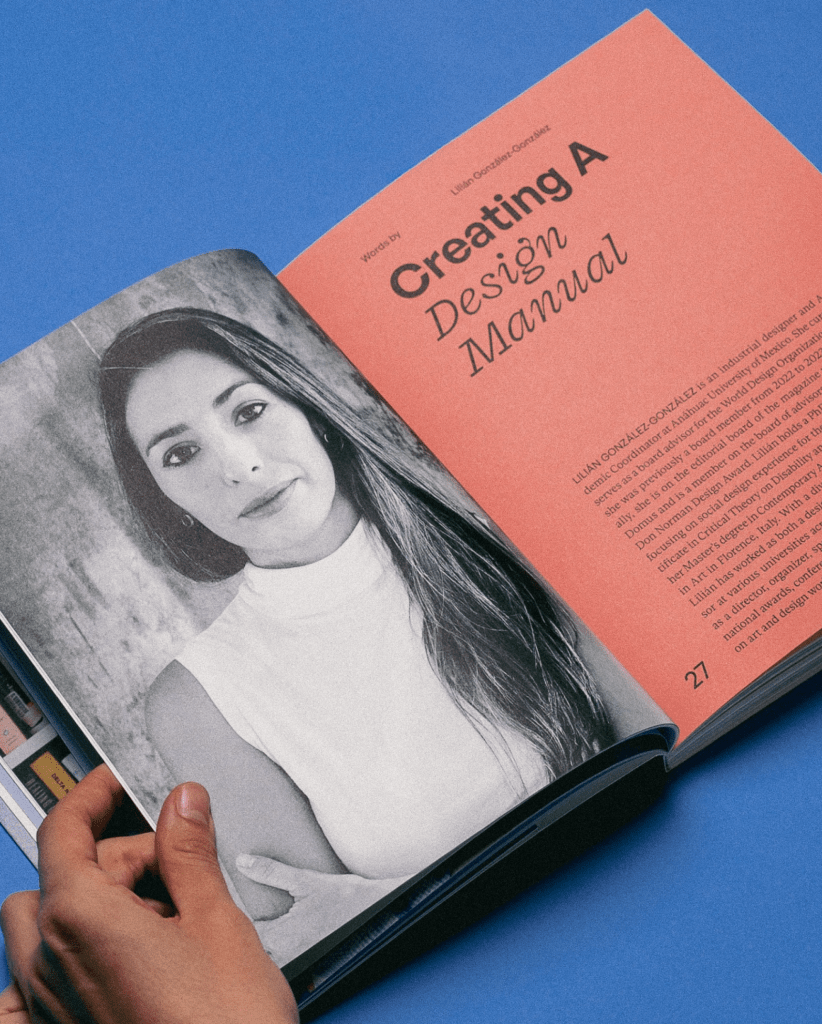
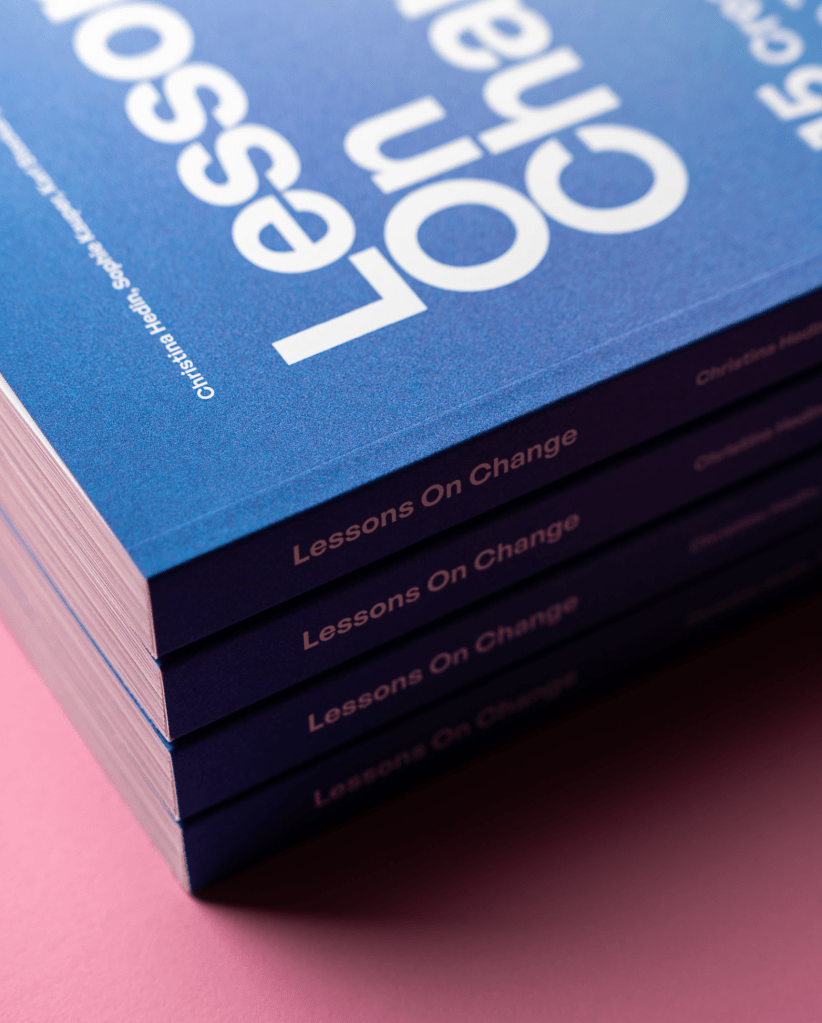
González, L. (2025). Creating a design manual. At Lessons on change: 15 creative minds share their stories (pp. 27–32). Birkhäuser.
 Design From Foundation: Designing experiences for the common good