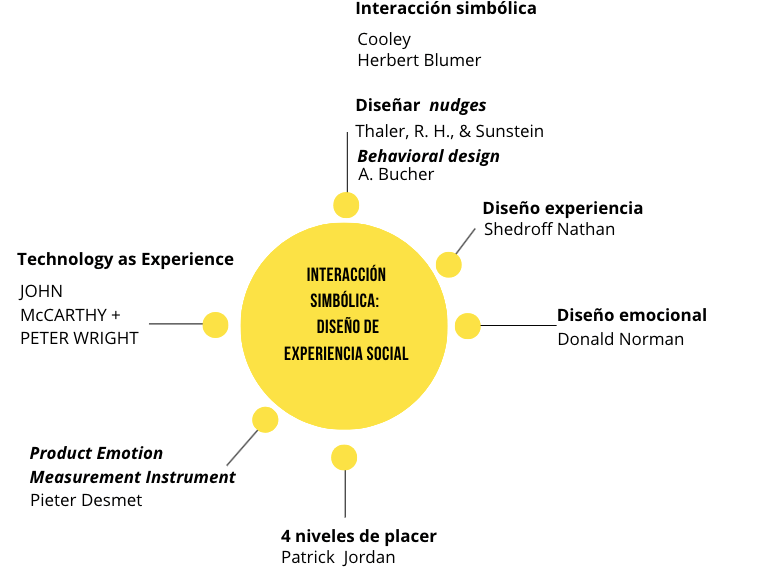
Our relationship with objects and the world that surrounds them can affect us symbolically, emotionally, and behaviorally through the ways we interpret reality and communicate with our environment and with others. From this perspective, design has the potential to foster meaningful change in both individuals and communities. Through a dynamic process, symbolic interaction gives rise to new behaviors and forms of awareness at both the individual and collective levels.
The concept of symbolic interaction, introduced by Herbert Blumer in 1937, proposes that verbal communication can be replaced or complemented by symbolic forms of communication to strengthen the impact of a message and promote social action. This approach emphasizes understanding social phenomena from the participants’ perspective through methods such as participant observation, documentation, and interviews (Pons Díez, 2010).
 Design Studio & Design Research Consultancy