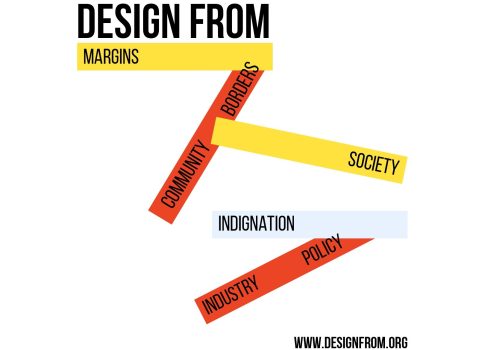
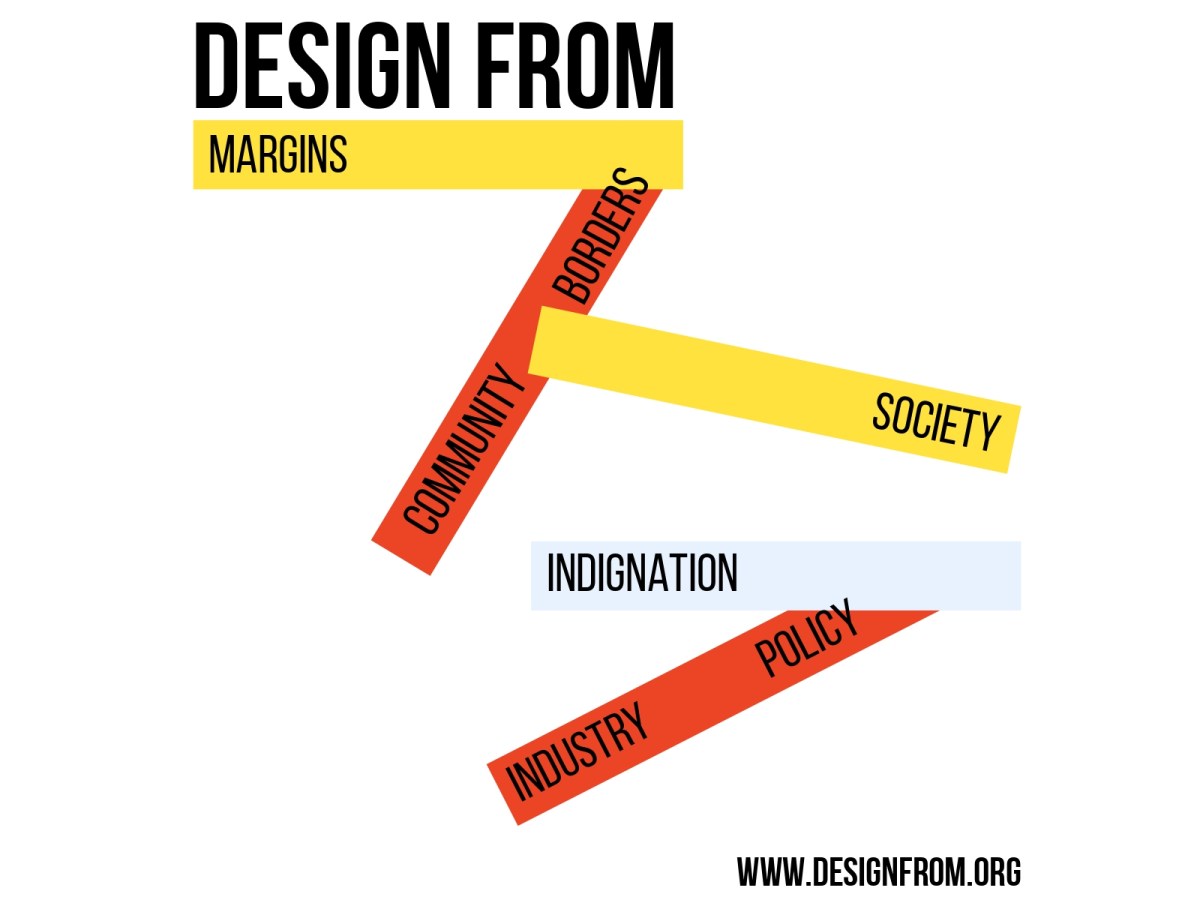
Welcome to the Design From: from society, from people, from humanity, from community, from margins, from borders, from indignation……
The prepositions matter
The difference between “design from” and “design for” or “design by” can imply a fundamental shift in design perspective and approach.
Design from: This expression suggests that design originates and is grounded in specific principles, values, subjectivities, or methodologies. For example, “designing from critical thinking” implies that design is guided by deep analysis, reflection, and critical evaluation of the social, political, cultural, and ethical contexts in which it operates. “Designing from people” is grounded in empathy and opposes the concept of alienation, proposing an exchange and dialogue between designers and the people “from” whom the design originates rather than “for whom” it is designed, thereby emphasizing the concept of alienation.
“From” contemplates the process of empathy that aims precisely to balance the critical state we live in, not just the alienation we live and operate in, or the superficiality and manipulation of the political and hegemonic order. This is precisely what motivates designers and artists to react and counteract it, seeking new ways to create. Until now, the idea “from” which we design has not been rethought as proposed here, as a discursive apparatus that dislocates meaning and questions the motive for designing, to foster true empathy with vulnerable, marginalized groups and critical states of violence that also strike and are struck by environmental, political, and economic problems.
In summary, “designing from” implies a shift towards a deeper, reflective, and ethical approach to design, which seeks not only to solve practical problems but also to address the fundamental and systemic challenges facing contemporary society.
The theoretical framework presented here is supported by a design methodology developed through years of research. This work has been documented in this book and will soon be expanded in a forthcoming design manual.
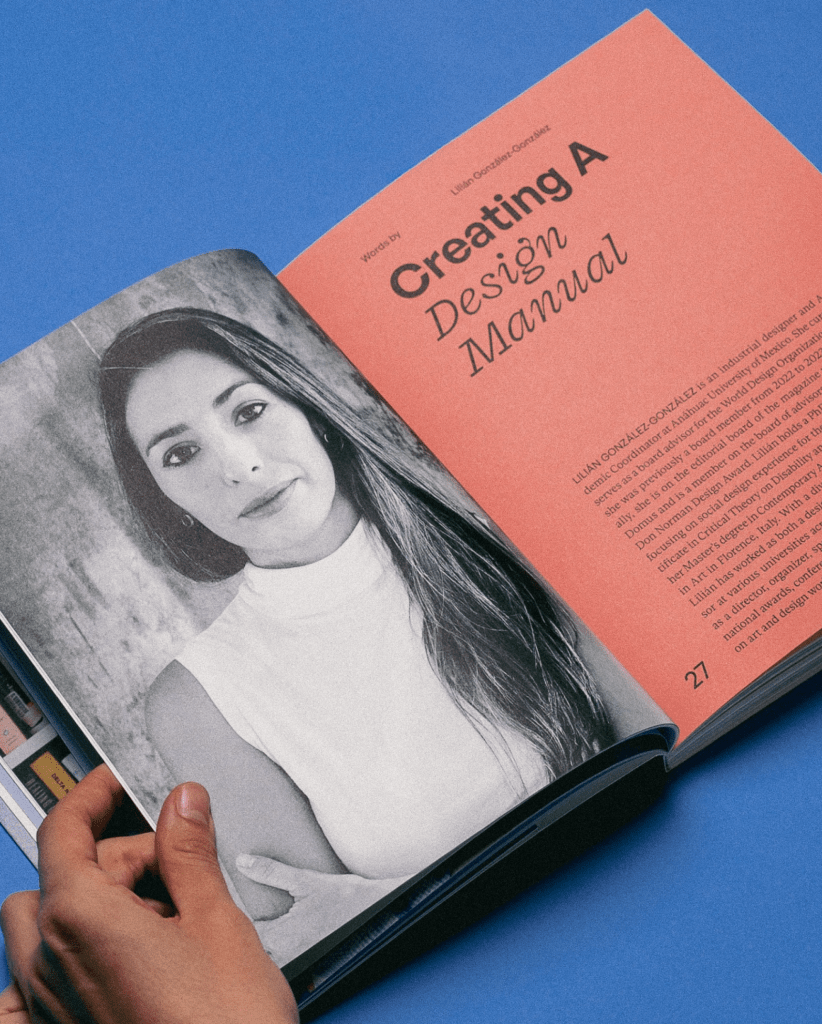
González, L. (2025). Creating a design manual. At Lessons on change: 15 creative minds share their stories (pp. 27–32). Birkhäuser.
States a Critical Reading of Reality
Every project is guided by the Design Manual, a research-based methodology that integrates Critical Theory into the design process.
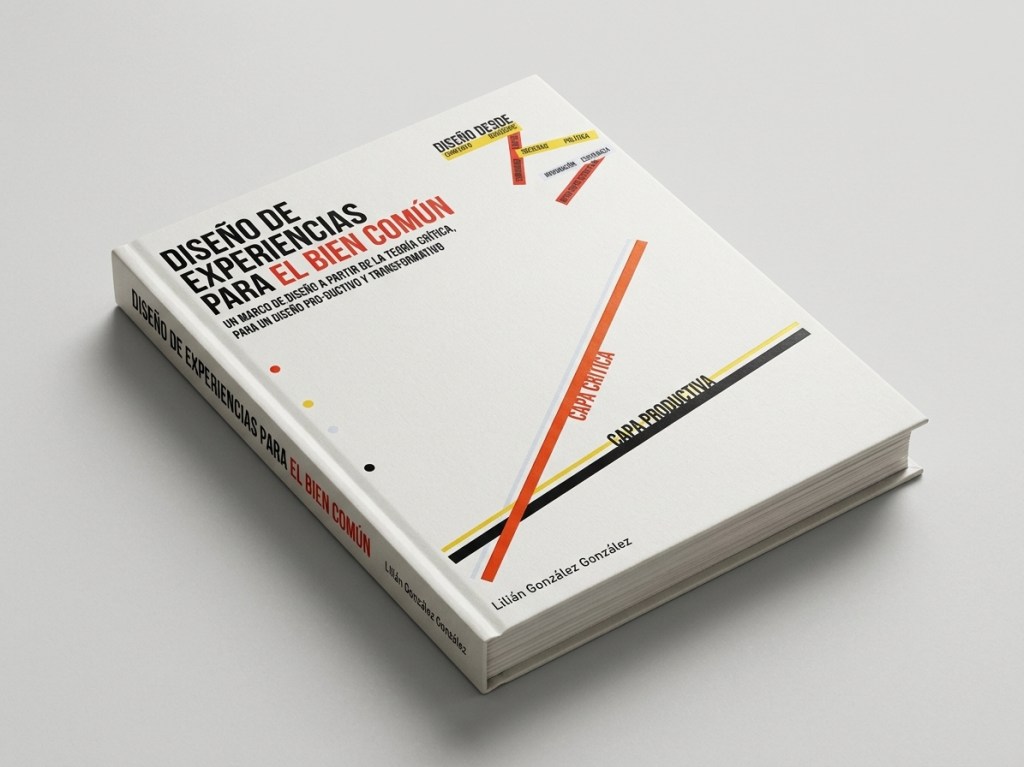
Manual diagram: “Social Design Experiences for the common good”
This design manual focuses on fostering reflection through a perspective informed by critical theory and critical imagination as applied to social design, specifically to the design of experiences for the common good.
Manual: Step by Step – E-book (forthcoming)
METHODOLOGY RECOGNITION 2025
The methodology was recognized at the Don Norman Design award in education at 2026 https://dnda.design/y25/laureate/?app=313

“Humanity-Centered Design Educational Award” to the Industrial Design program at Anáhuac University of México.

