The transformation proposed here is to reconceptualize this term as an interface for critically interpreting reality before, during, and throughout the design research process, as well as in the development of design solutions. This shift has the potential to bring about a profound and significant change in how design is currently understood and practiced.
From this perspective, the Manual proposes a shift from Design Thinking to Design from Critical Thinking; that is, from a design approach driven primarily by the materialization of a particular concept to one that critically guides its aesthetic and political intervention in the world. This constitutes one of the methodology’s most distinctive and innovative contributions.
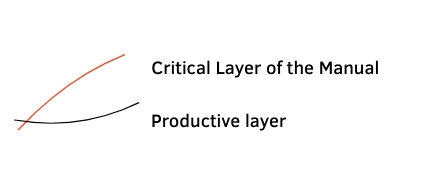
The following diagram outlines the steps that support a reflective and critical orientation of design as a political practice, one that permeates the processes through which design generates meaning and social impact. The Critical Reading of Reality proposed in this Manual functions as a methodological threshold: a point of transition where designers move beyond superficial observation toward a structural, ethical, and critical understanding of the context.
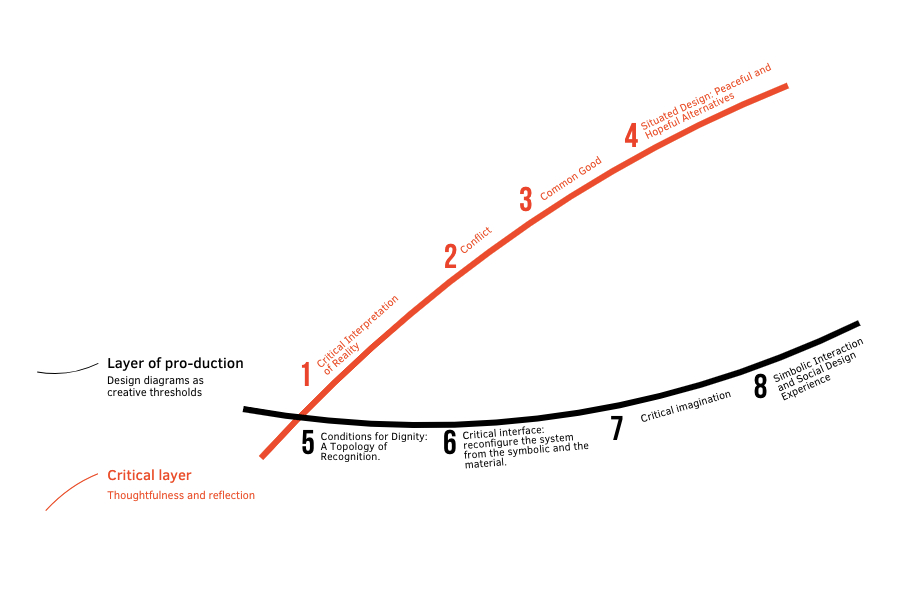
These phases are organized into two interconnected layers: a critical layer, which provides the ethical, political, and theoretical foundation of the process, and a pro-ductive layer, understood in the sense of poiesis as the capacity to bring into the world something that did not previously exist (Agamben, 1970). The Critical Reading of Reality, conflict, the Common Good, and design for the emergence of alternatives of peace and future constitute this critical layer. Together, they form the pillars from which the role of design is reimagined in complex and unequal contexts.
From this foundation emerge the components of the pro-ductive layer: the Critical Interface, Critical Imagination, Symbolic Interaction, and the Framework of Conditions for Dignity. These elements activate critical thinking through a situated, context-sensitive, and transformative design practice.

